
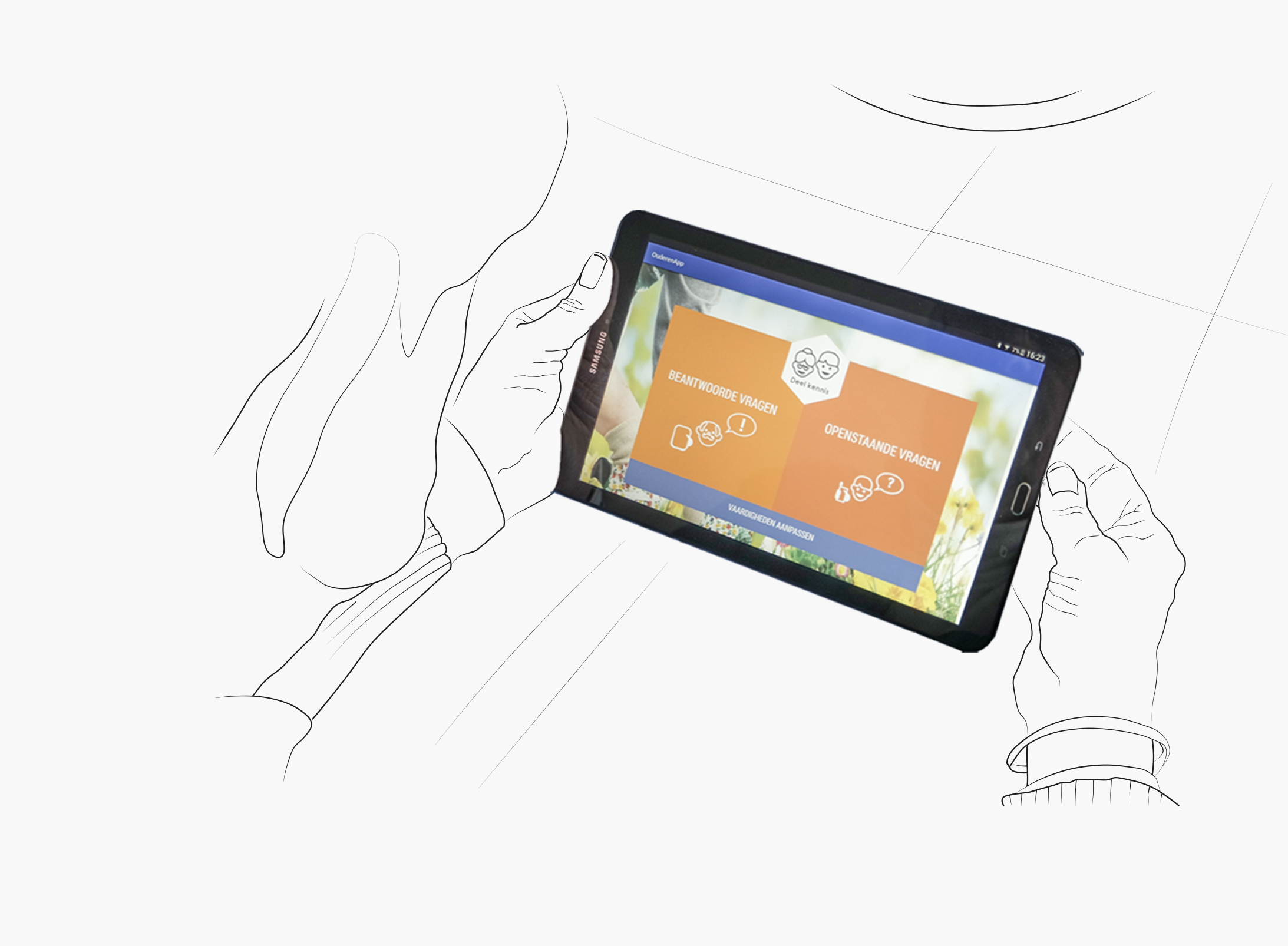
Elderly as professionals
Role
User research
Brainstorming & wireframing
UI/UX design
Prototyping
Duration
4 Months
Background
This project was a collaboration between the TU/e and ZuidZorg, where the focus lied on active aging. “Active Aging” is a broad term that can be viewed from different angles, for example from a cognitive or a physical perspective. At the start of this project I decided to approach the topic from a physical perspective as being physical active is closely linked to my personal life. I am a sport instructor and I believe that staying active will benefit people’s physical and mental abilities when getting older.
Research
To get an understanding about the the topic of active aging, and to empathise with end users I:
- Conducted interviews.
- Held workshops.
- Conducted a literature study related to behavioural change, elderly psychology, and sedentary behaviour amongst elderly.

Main outcomes are:
- Fitting the design solution seamlessly in the daily routine of the elderly increases the likelihood of a lasting behavioural change.
- Research shows that elderly spend on average 183 minutes a day in front of a television. This time is marked by low physical activity and prolonged sitting behaviour which is shown to cause serious health issues over time [1].
- The elderly that participated in the workshops unanimously responded that they were not elderly who had in inactive lifestyle. Quite the opposite actually. Throughout the interviews and workshops it became clear that these elderly mostly struggle with feeling left out from society and being viewed as helpless individuals. They explained their frustrations about being approached as a child instead of an adult.
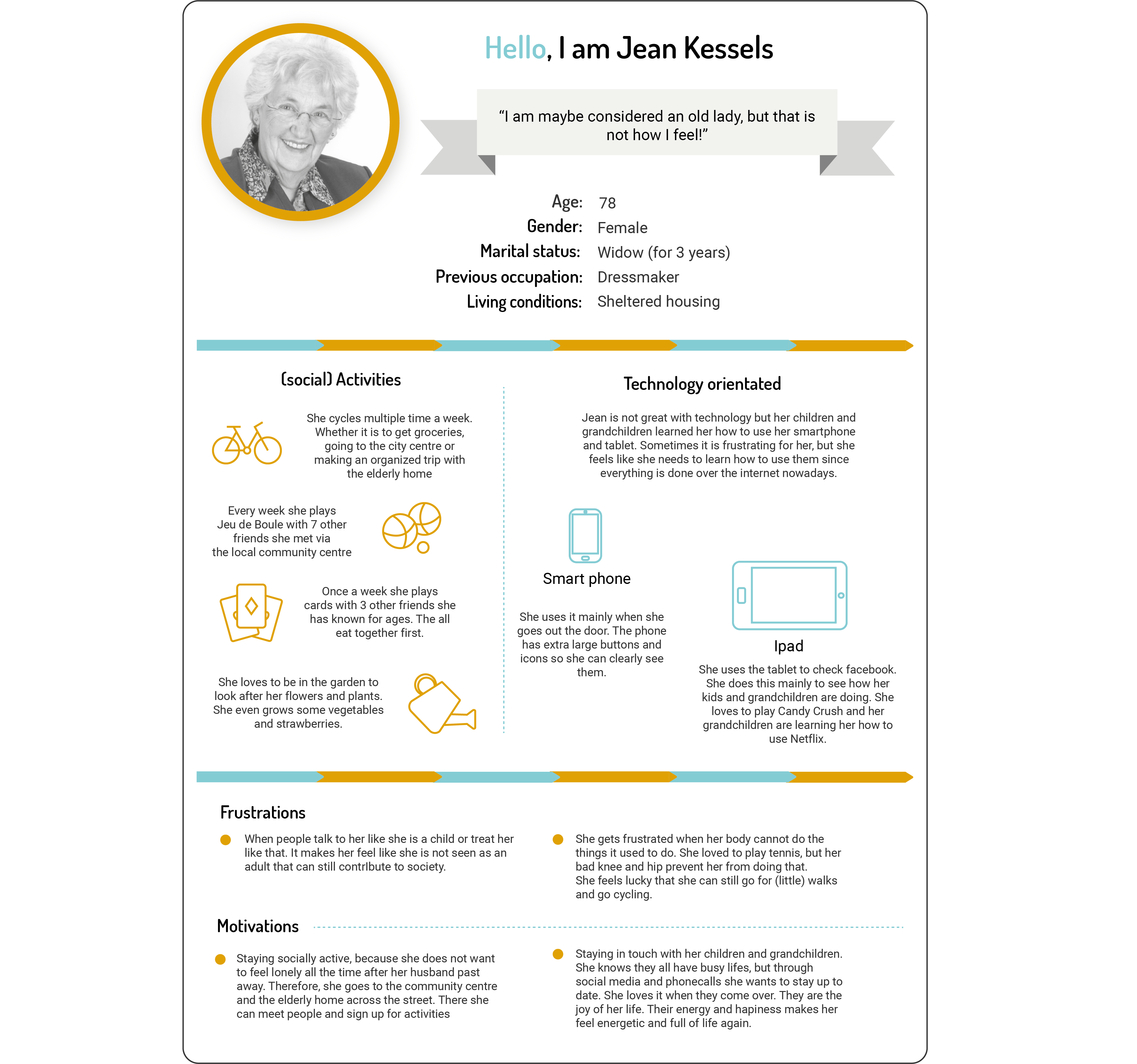
Based on the research and empathising phase, I learned that there are many types of elderly. Therefore, I created a persona to maintain a clear design focus. The persona is based on the workshops and interviews I conducted.
Ideation & Conceptualisation
The input of the research & empathising phase has let to many ideas during the brainstorm session. After weighing the remaining ideas, one fitted the problem description best. To visualise and communicate the idea, I worked it out as a scenario.
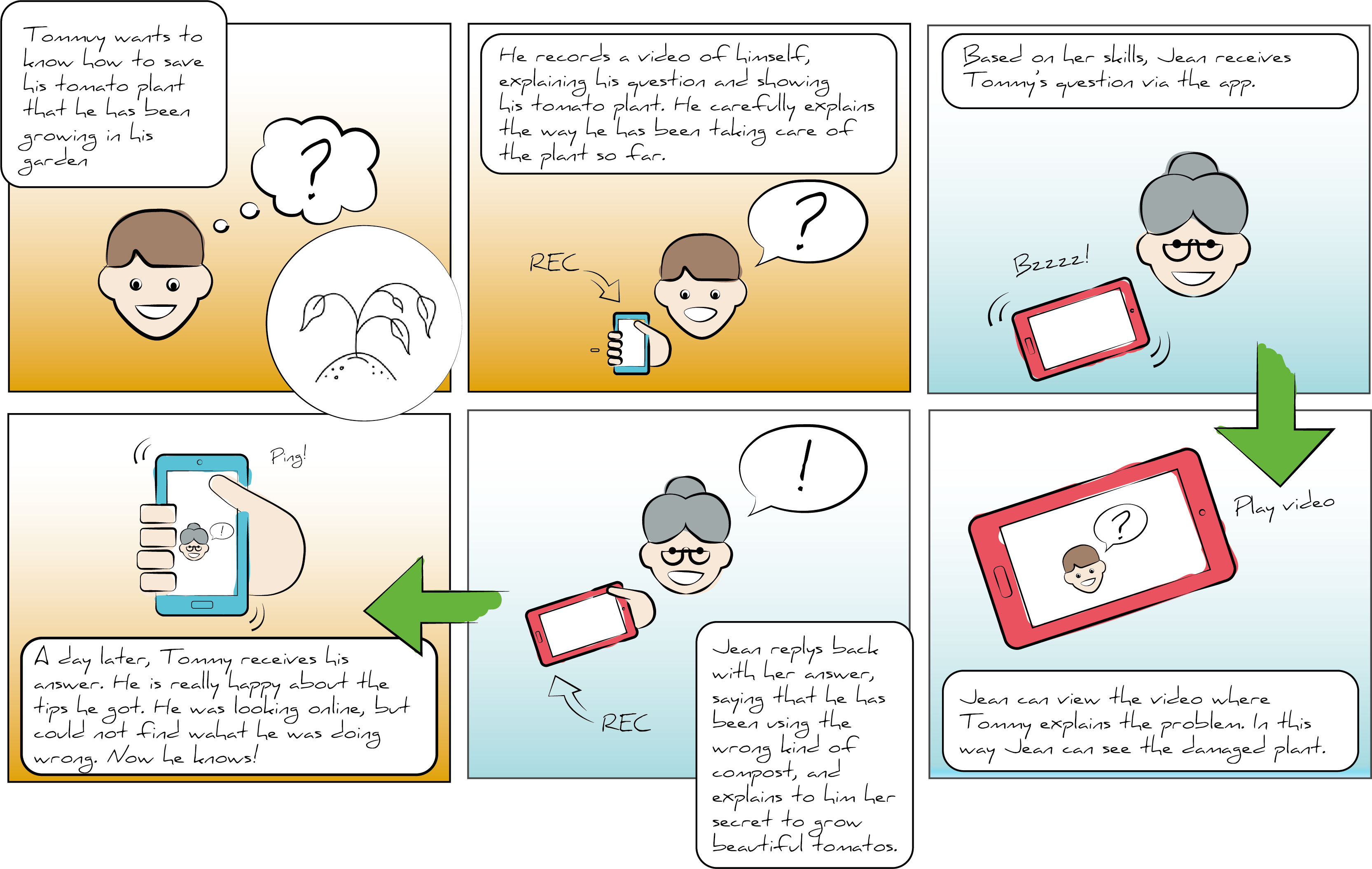
The scenario was evaluated by elderly during a workshop, which answered several questions. For example:
- In what way do you want to receive and answer the questions?
- Would you like to have some information about the person who is asking you a question? What kind of information would that be?
- How would you feel if you do not know the answer to the question? What would you do then?
- How would you react if you receive five questions at the same time?
Besides that, I held interviews with people ranging from 21-43 years old to see how they evaluated the concept. The main question asked during the interview was if they would use this app over search engines such as Google.
The information obtained during the workshop was used for a SWOT analysis to refine the concept.
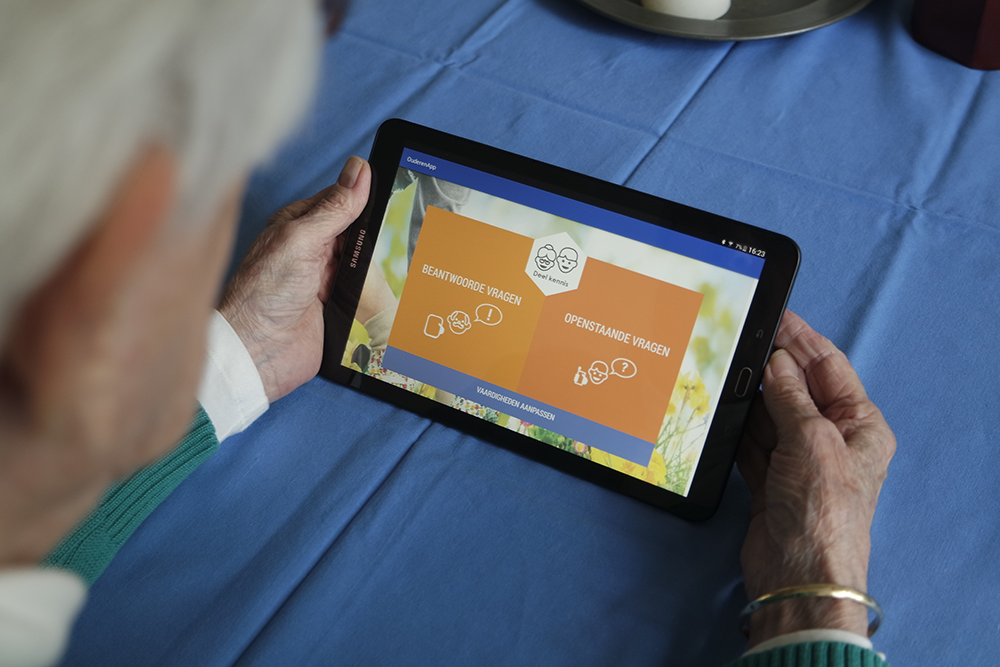
The final concept can be seen as a ‘Marktplaats’ app for knowledge. The app connects the elderly with younger generations. Elderly have knowledge that younger people nowadays no longer learn in school. From this perspective, the elderly can be seen as professionals and their knowledge can serve as tool to connect with younger age groups. The design solution entails a mobile application that enables (young) users to record questions. Elderly on their turn receive these questions on their tablet based on their specific skill set. They can reply with an answer by creating a short video. The receiving user can then create a thank you card to send to the elderly person who helped him or her.
The design still focuses on maintaining an active lifestyle as it facilitates activity through engagement. For this concept, being active happens outside of scope of consciousness, as activity is an indirect effect of the interaction.
App
After sketching and creating wireframes of the app, I used Android Studio to create a working prototype.
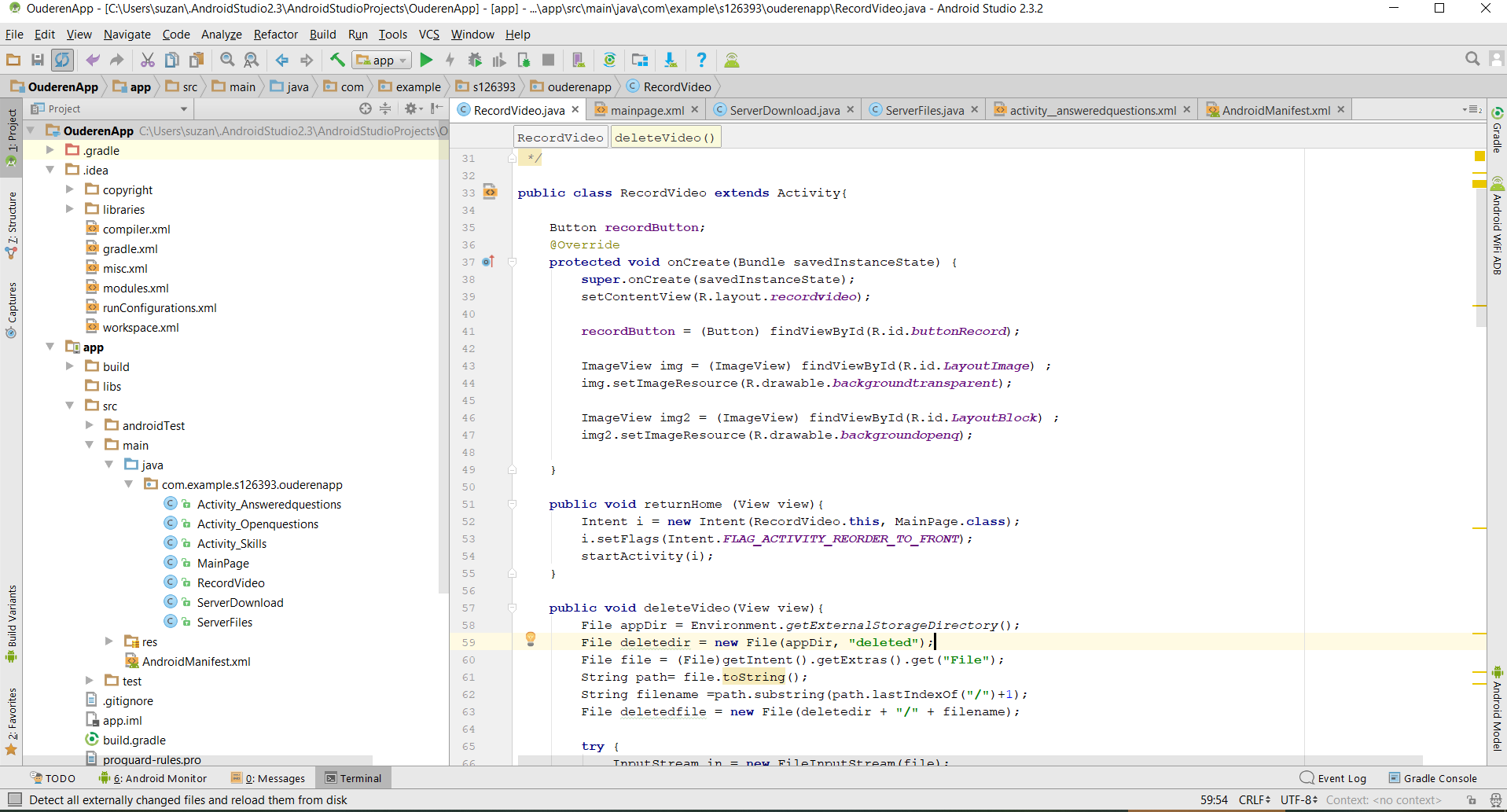
The final design of the app for elderly contains:
- Overview of answered questions
- Overview of unanswered questions: elderly can click on a questions so they can view the video. Subsequently, they have the option to record an answer and send it back.
- Overview of skills: here elderly can define or edit skills they master. Based on this, elderly receive specific questions.
The final design of the app for people who want to ask questions contains:
- Overview of answered questions
- Overview of unanswered questions
- Option to send a thank-you card: here people can quickly create a postcard to send as a thank you.
Testing
One elderly woman of 79 participated for the user test. She used the app for a week. Five people used to app to send a question. Due to time restrictions it was not possible to include more participants.
On the second day of the user test the participant received four questions and only one question on the third day. This was done on purpose to see how she would experience the difference in quantity. Would it feel as too much pressure to receive multiple questions on one day? Would she feel disappointed when she would not receive any questions? After each day I contacted her to get feedback, because then she could well remember the experiences of that day. The other five participants received a questionnaire at the end of the week.
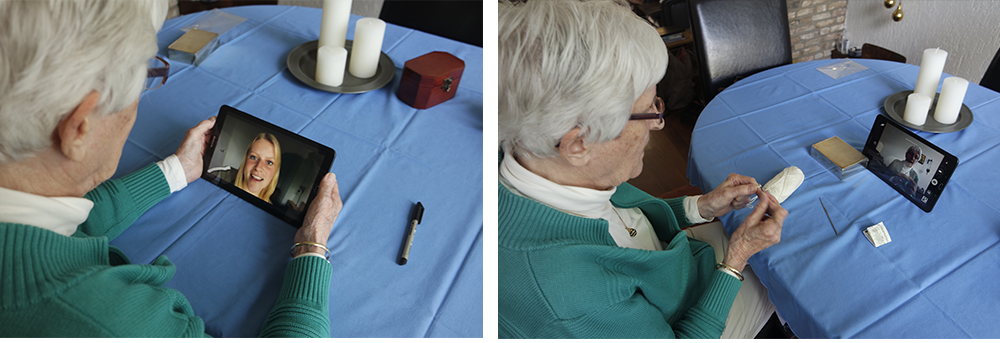
Main insights of the user test are:
- The user test resulted in new insights about the aspect of social engagement. When the elderly participant did not know the answers to a question, she decided to walk over to one of her friends to discuss it. She also wanted the option to send the questions to people who she believes know the answer, but who do not live close by. In this way the concept becomes a greater social experience.
- Three of the users who asked a question said that the app can work better then search engines. Search engines are static which means that if you find an answer that is not completely applicable to you problem, then there is not much a person can do. However, the answers that a person receives via the platform is specific to your problem. In that way, using the app can sometimes be even faster and easier than trying to find the information online.
[1] Visser, M.(2014). Sedentair gedrag van ouderen. Retrieved Februari 27, 2017, from: http://www.anderszorgen. nl/documenten/LASArapportsedentairgedragouderen.pdf